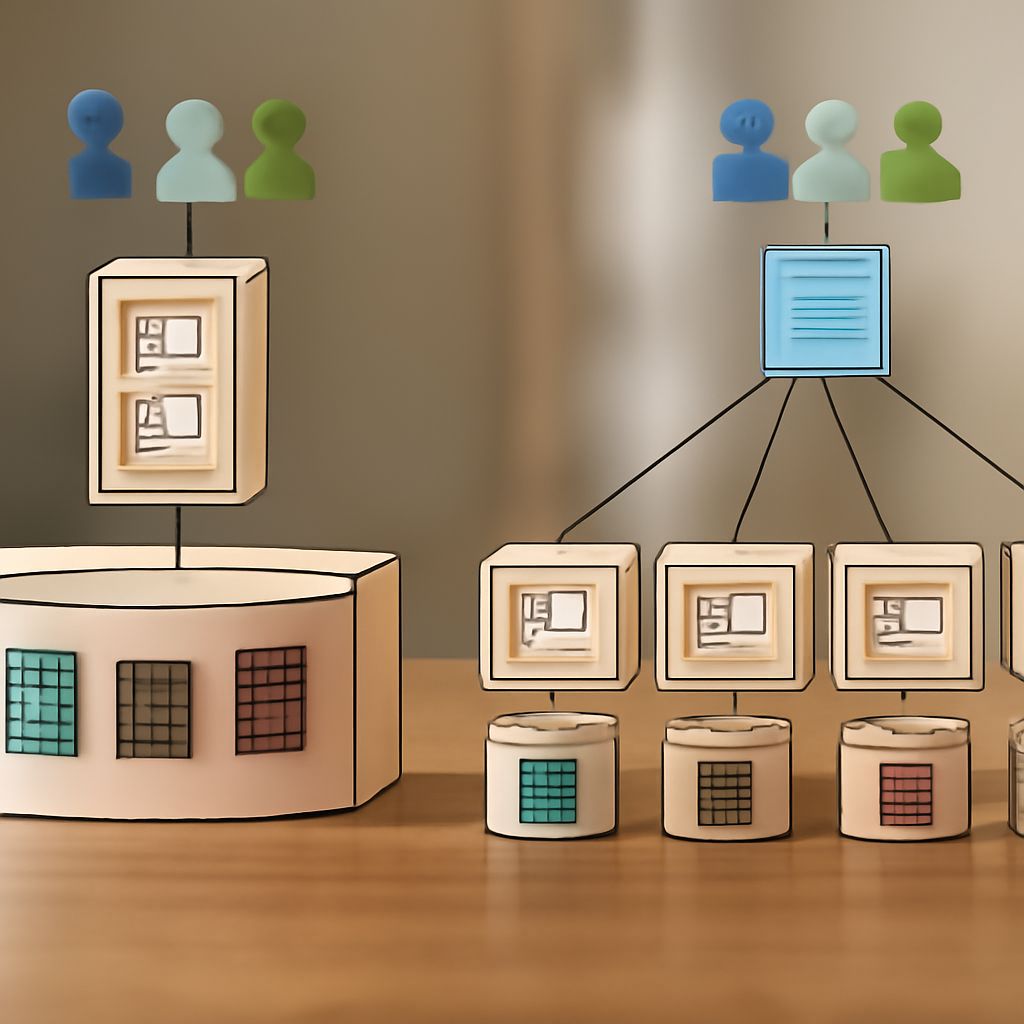
To effectively leverage microservices in your software projects, understanding Martin Fowler’s insights is crucial. Fowler, a renowned software development expert, has extensively discussed microservices and their role in modern software architecture. By breaking down monolithic systems into smaller, independent services, you can enhance scalability, flexibility, and maintainability.
What are microservices according to Martin Fowler?
Martin Fowler describes microservices as a way of designing software systems as suites of independently deployable services. Each service is designed around specific business capabilities and can be developed, deployed, and scaled independently. This architecture contrasts with traditional monolithic systems, where all functionalities are tightly interwoven, making changes and scaling more challenging.
Benefits of using microservices in software projects
Utilizing microservices offers several advantages. Firstly, they enhance scalability, allowing you to scale individual services based on demand rather than the entire application. Secondly, microservices improve resilience; if one service fails, others can continue to operate. This architecture also facilitates faster deployment cycles because teams can work on different services simultaneously without affecting the entire system. Finally, microservices support technology diversity, enabling you to use different technologies and programming languages best suited for each service.
Planning and scoping microservices architecture
When planning a microservices architecture, start by identifying distinct business capabilities that can be transformed into individual services. Focus on creating autonomous services that communicate via well-defined APIs. It’s vital to establish clear service boundaries to prevent overlapping responsibilities. Consider implementing an API gateway as a single entry point to manage requests and authenticate users. Additionally, you should invest in proper monitoring and logging tools to track service performance and quickly identify issues.
Common challenges and solutions
Despite their benefits, microservices come with challenges. One major challenge is service coordination, as distributed services need to work together seamlessly. Implementing orchestration tools can help manage interactions. Another issue is data management; ensure each service handles its own data to prevent cross-service dependencies. Security is another concern; using token-based authentication can enhance security across services. Lastly, maintaining consistent logging and monitoring practices is essential to keep track of service health and performance.